Searching for yourself in retreats and ceremonies: when the euphoria isn't the answer
Retreats, healers and ceremonies promise healing. Sometimes they give something beautiful. But they can also break open old pain without anyone to catch you. About the bright and the shadow side, and how to look after yourself.
By SheVibes5 minUpdated 17 November 2026
A week that would change everything
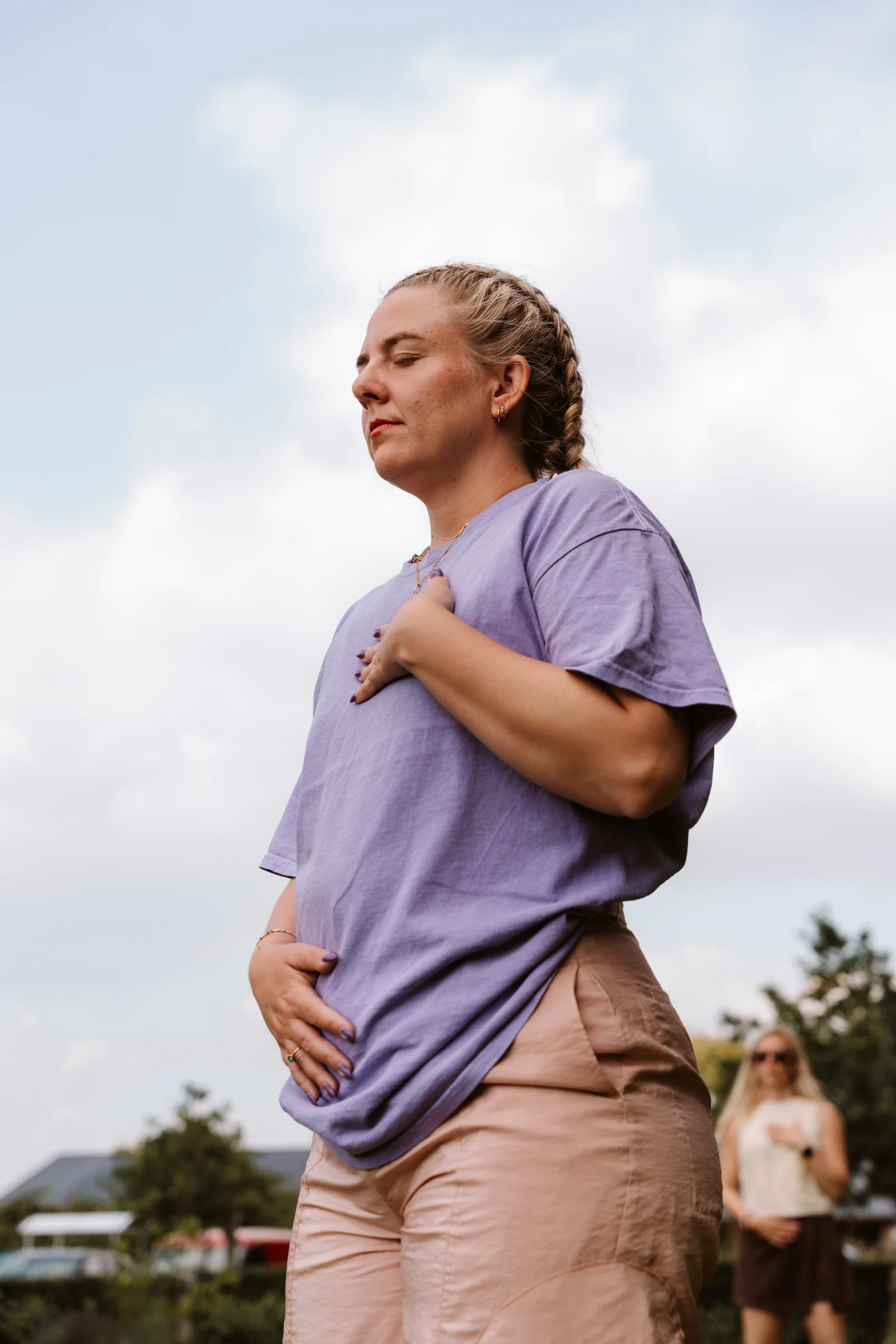
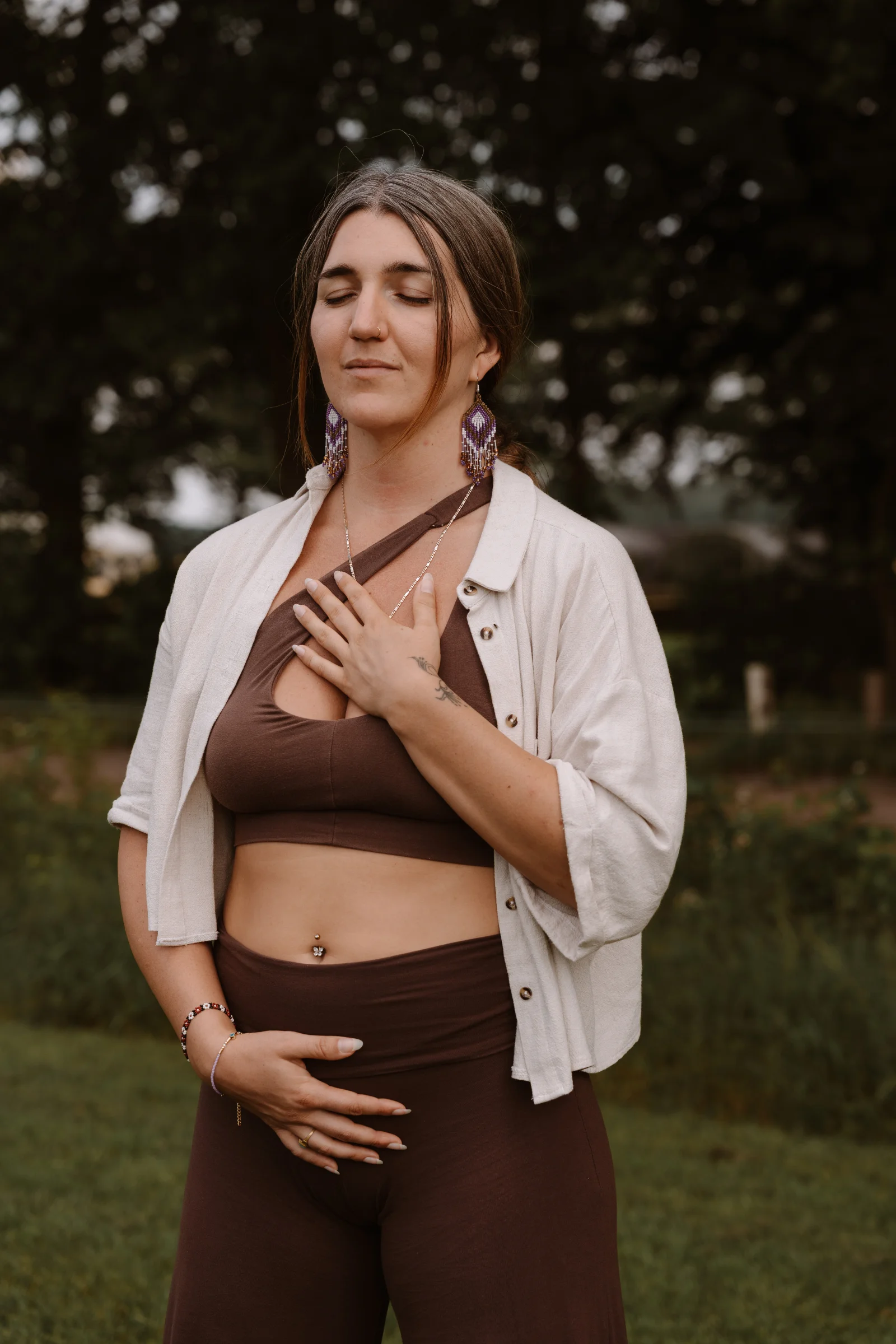
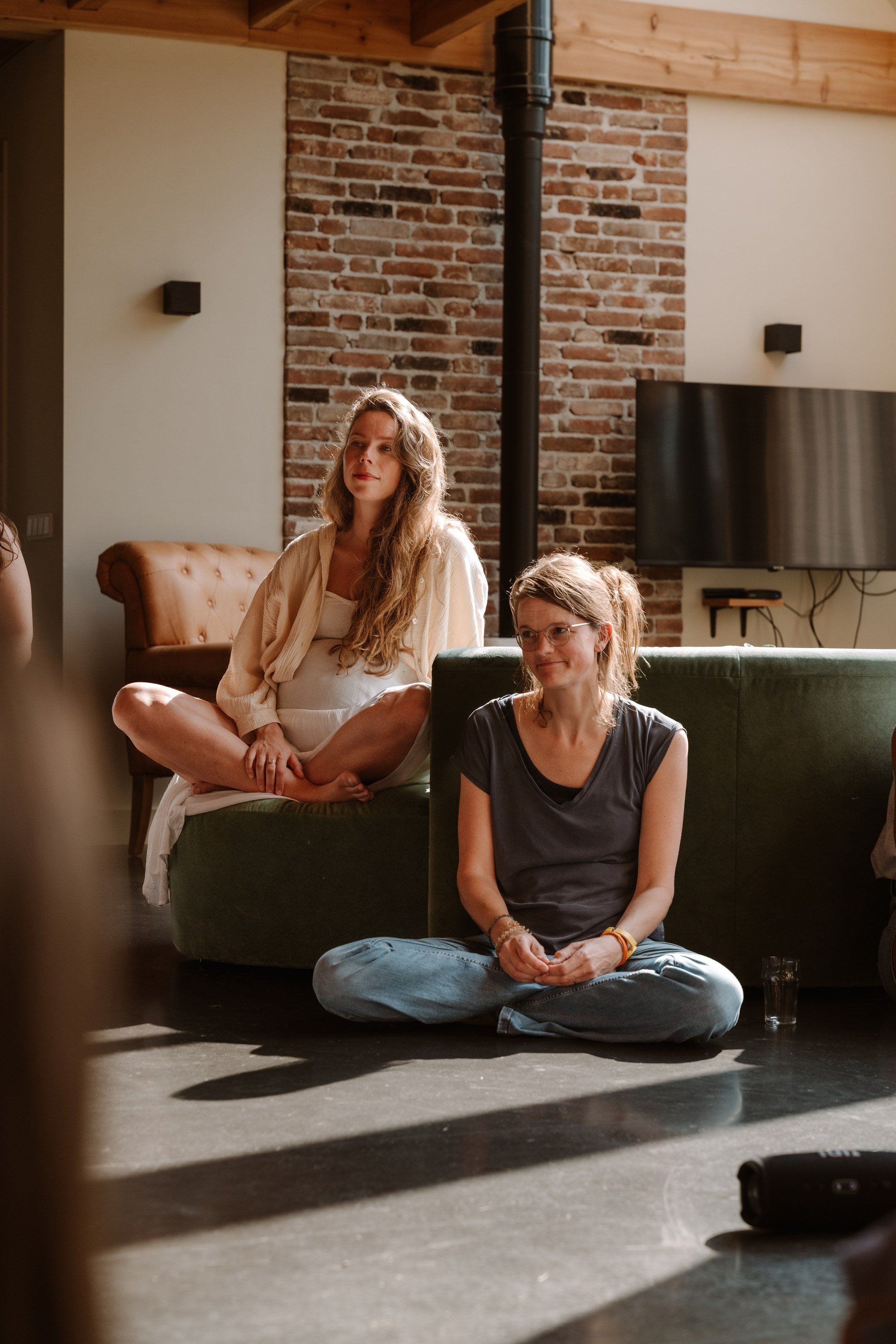
After a hard period you book a retreat. Yoga at sunrise, breathwork, a circle of women who after three days seem to know you better than your own family. On the last evening, a ceremony. You cry like you haven't cried in years, and afterwards feel lighter than ever. Finally, you think. This is it.
Two weeks later you're back at the office. The old feelings come back, sometimes more intense than before. You sleep badly and see images from the past you hadn't seen in a long time. The retreat group chat is full of love and light, but no one asks how you're really doing now. So you book the next one.
Many women searching for healing end up in this world somewhere along the way: retreats, healers, ceremonies, spiritual communities. A lot of beautiful things can happen. But it's also good to know the shadow side.
What it can give
Let's be honest: many people really get something out of it. Calm, connection, attention for your body, the feeling of finally being seen. According to the Trimbos Institute, the Dutch institute for mental health and addiction, sessions at retreats can have a therapeutic effect. A strong experience can make you feel more is possible than you thought.
Where it can chafe
Euphoria is not the same as healing. An intense experience can feel like a breakthrough. But without preparation and without someone who helps you place it afterwards, sometimes mainly a peak is left, followed by a dip. The Trimbos Institute describes how, in research on psychedelics as therapy, it's precisely the setting around the experience that counts: strict screening beforehand, preparatory sessions, support during the experience and integration with therapy afterwards. In that research, psychedelics are used as an aid alongside psychotherapy, not instead of it.
There is no oversight. The Trimbos Institute writes that retreats don't offer recognised therapy and that oversight is lacking. There's no quality mark and no recognised training for facilitators. Jellinek, the Amsterdam addiction care service, warns that not all providers are competent to handle difficult situations.
It can break open old pain. Without proper guidance, existing mental health problems can get worse, the Trimbos Institute writes. Jellinek calls ayahuasca a possible trigger for psychiatric conditions, such as psychosis. An ayahuasca experience is also hard to control. For someone with trauma, that very feeling of losing control can stir up a lot, and that can feel like living through something again rather than processing it.
Dependence on a leader. Someone searching for healing is often vulnerable. That makes the relationship with a teacher or healer sensitive to abuse of power. In 2022 NOS, the Dutch public broadcaster, reported on a group of women warning about a "healer" who, according to them, targeted women with trauma. One of them said: women with trauma seek help for it there, and then become even more traumatised. The research institute of the Dutch Ministry of Justice (WODC) describes how abuse in religious and spiritual communities is often resolved internally or covered up, and how victims afterwards may lose not only the group but also their sense of spirituality and connection.
Signs to take seriously
A good place feels safe, even when it's exciting. Be alert if:
- no one asks about your health, medication or mental health history beforehand;
- your doubts or boundaries are explained away as "resistance" or "ego";
- the leader seems to be the only one who knows what's good for you;
- you're encouraged to distance yourself from friends or family who are critical;
- more and more expensive follow-up programmes seem necessary to "get further";
- you're asked to keep what happens secret;
- touch or intimacy is presented as part of the healing.
If you go anyway
- Talk to your GP beforehand, especially if you use medication. According to Jellinek, ayahuasca can cause dangerous reactions in combination with certain medicines, drugs or food. Jellinek advises discussing your medication with the provider beforehand and doing your own research.
- Do you have a mental health condition, or does someone in your immediate family? Then Jellinek advises against using ayahuasca. According to DRUGSinfo, the risk of psychosis, for example, is higher then.
- Ask how aftercare is arranged. Who can you call if you're not doing well a week later?
- Confide in someone outside the group, and tell them what you're going to do.
- You can always stop. Even halfway through a ceremony, and even if everyone around you carries on.
After an experience that won't let go
Do you feel restless, anxious, confused or low after a retreat or ceremony, or are memories coming up that overwhelm you? That's not a sign you "didn't do it well enough". It's a signal that you need support from someone who can catch you well. DRUGSinfo, the drug information service of the Trimbos Institute, offers anonymous advice about symptoms after using ayahuasca. Discuss it with your GP too.
And if something happened in a group that crossed your boundaries: that's not your fault, even if you chose to be there yourself.
Your search can stay
Longing for healing, connection and meaning is nothing to be ashamed of. It's actually something beautiful. The difference lies in where you look for it, and whether there's someone who also catches you when it gets hard. Lasting change is often less spectacular: step by step, with someone who keeps standing beside you.
At SheVibes we work with women on trauma and PTSD, with attention for body and mind, within regular mental health care and with a referral from your GP. Read how signing up works.
In an emergency, call 112. Are you thinking about suicide? Call or chat with 113 Zelfmoordpreventie for free, day and night, on 0800-0113.
This information is a general explanation and does not replace personal advice from a practitioner or GP. If you use medication or have a mental health condition, always talk to your GP before taking part in a ceremony involving substances. In an emergency, call 112. If you are thinking about suicide, call or chat with 113 Zelfmoordpreventie (suicide prevention) 24/7.
Sources
The facts in this article come from these sources, so you can check them yourself.
- Trimbos-instituut, Factsheet psychedelica-therapie (opens in a new tab)
- DRUGSinfo (Trimbos-instituut), Ayahuasca en DMT: risico's (opens in a new tab)
- Jellinek, Wat zijn de risico's van DMT en ayahuasca? (opens in a new tab)
- NOS, Actiegroep waarschuwt voor omstreden 'healer' (28 augustus 2022) (opens in a new tab)
- WODC, Onderzoeksnotitie seksueel misbruik en aangiftebereidheid binnen religieuze gemeenschappen (opens in a new tab)
Does this sound familiar?
You don't have to figure it out alone.
At SheVibes we work with women on concerns like these, in basic and specialist mental health care. With a referral from your GP you can sign up; there's no waiting time right now, you start your intake and therapy right away.